

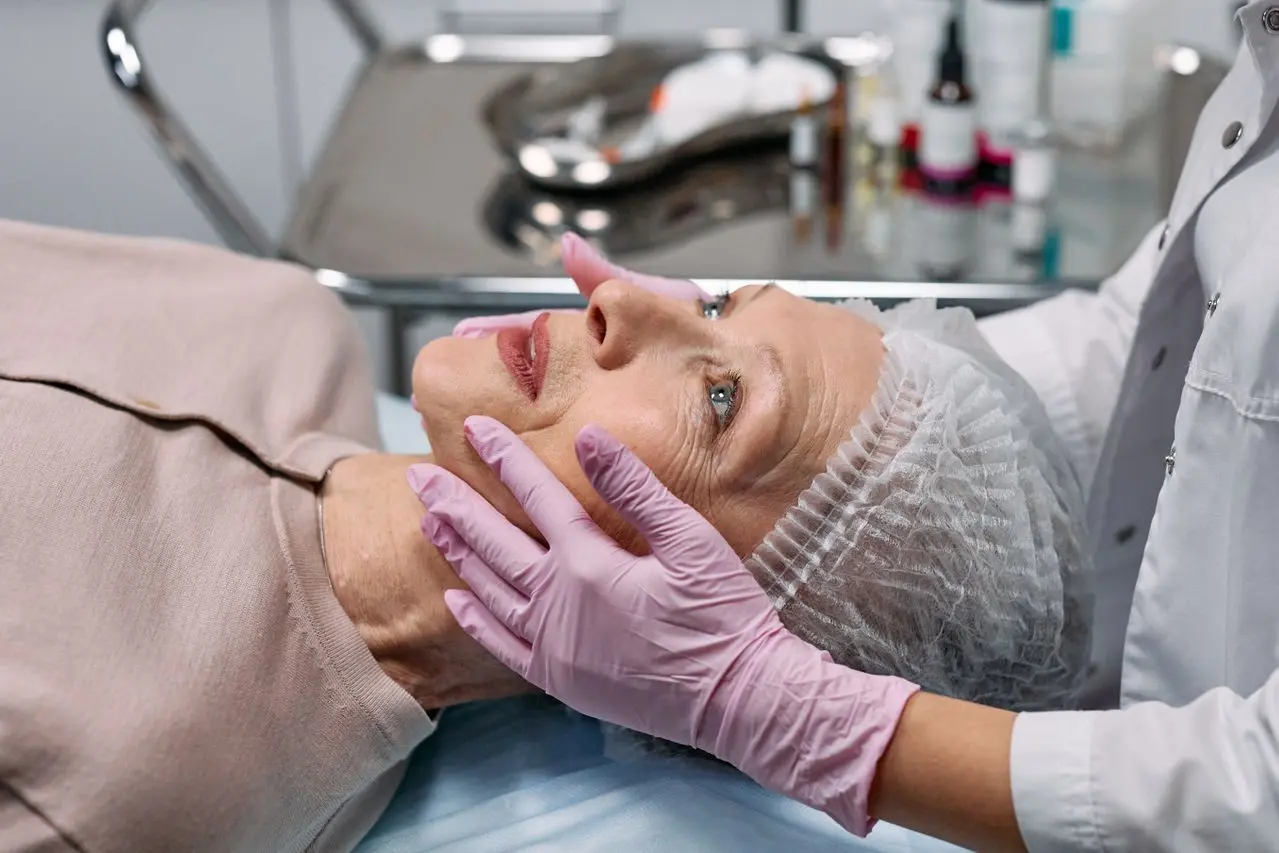


For many patients, a facelift, also known as a Rhytidectomy, can be an ideal way to reverse common signs of ageing and refresh their facial appearance.
After all, the face is the most visible part of the body, and the one that often gives our age away the most. Facelifts, along with other facial surgery procedures, such as neck lifts, brow lifts, lip lifts and eyelid surgery, can all help to rejuvenate the face and restore your youthful appearance.
Generally, recovery after a surgical facelift takes around four to six weeks, with full recovery and results taking up to three to six months. Still, this is only a rough estimate, and there are many factors to consider.
For anyone who is considering a facelift, it is important to understand facelift recovery to ensure you’re fully prepared. Keep reading to see the facelift recovery process explained in detail by leading plastic surgeon Sinclair Gore.
How To Prepare For Your Facelift
To ensure optimal recovery, you need to make sure you prepare before you undergo surgery, and that you follow your surgeon’s instructions. Some simple ways to prepare for facelift surgery include:
- Stop Smoking: Tobacco and associated nicotine products such as cigarettes, vapes, patches and gum inhibit the healing process because nicotine squeezes down the little blood vessels that power wound healing. As such, you should ensure you have stopped taking any nicotine at least 6 weeks before your surgery.
- Focus On Healthy Lifestyle Habits: As well as stopping smoking, you should focus on healthy habits such as eating a balanced diet, drinking plenty of water and taking light exercise before your procedure.
- Be Honest With Your Surgeon: Before your surgery is performed, make sure you discuss your medical history and lifestyle habits honestly with your surgeon.
- Arrange Time Off Work: Book at least the first week post surgery off work, or longer if you work in a strenuous or physical role. Make sure you have support for any children or pets you care for and make provision for home chores during the initial recovery process.
- Get A Lift Home: While you will definitely need a lift home after facelift surgery, it is also worth considering asking someone to take you to the hospital so that you can relax before the procedure.
- Follow Instructions: Before the procedure, you will need to avoid food and drink (apart from still water) for around 6 hours, so make sure you follow all instructions provided by your plastic surgeon to ensure your safety and optimal recovery.
Facelift Recovery Timeline
All patients heal at different rates, so the recovery process might look slightly different for you. However, this a rough facelift recovery timeline.
Days One To Two: Immediately After Surgery
On day one, you will remain in hospital overnight to ensure optimal healing. While some surgeons allow facelift patients to be treated as day cases, Mr Gore believes that such a significant procedure benefits from overnight hospitalisation. This aids with relaxation after surgery and careful monitoring of blood pressure, which in turn increases the chances of a successful outcome. When you are discharged from hospital the day after your operation, you will have some taping and ointment around your face but usually Mr Gore does not insist on heavy bandages or dressings. You will notice some initial facial swelling in the days after surgery and it is possible you will experience some sensations of tightness in your neck when opening your mouth, and when swallowing. Your surgical team will provide you with appropriate wound care advice.
The First Week: Initial Healing Process And First Round Of Stitches Removal
In the first week after surgery, it is important that you get plenty of rest and avoid strenuous exercise or even touching your face too much to reduce bruising and swelling. Drink plenty of water and follow your surgeon’s advice. Swelling peaks around four days after surgery, so you should start to see some visible signs of healing towards the end of the week. Mr Gore typically recommends a first round of removal of surface skin stitches a few days after surgery and he usually performs this wound care himself.
Week Two: Removal Of Remaining Stitches
During the second week, you should start to see clear signs of recovery, with the residual swelling gradually going down. Some bruising, particularly around the lower eyelids, may persist during this time. Towards the end of this time, you will have a follow-up appointment to remove your remaining stitches and check your progress.
Week Three: Visible Improvement
In week three, following the removal of the stitches, you will start to feel more like yourself. Whilst recovering, your face may feel numb or tight, but this will start to ease during the third week. While you should still avoid strenuous exercise, as the bruising and swelling subsides you may feel able to start slowly doing more activities.
Week Four: Resume Normal Activities
By week four, most patients feel significantly better and are cleared to return to work and most activities. While it can take a few weeks to a month more to fully heal, you should now feel much more comfortable.
Month 2-3: Full Results Visible
Over the next several weeks the full results of your facelift procedure will become evident. Incision sites will start to blend into your natural facial contours and the residual swelling will slowly fade away, leaving you to feel confident in your new youthful appearance.
Factors That Affect Facelift Recovery
Most patients experience this approximate timeline, but everyone is different, and the recovery process could alter depending on a range of factors, including:
- Type Of Surgery Performed: There are many different types of facelift surgery available, ranging from a mini facelift to a more comprehensive deep plane facelift. In some cases, your surgeon may perform multiple procedures, such as a facelift, necklift, browlift and blepharoplasty at the same time to give you the results you want. More invasive procedures will give more visible results, but may require a longer healing period and lead to more facial swelling and bruising.
- Your Surgeon’s Experience: Working with an experienced surgeon, like Sinclair Gore, gives you a stronger chance of getting the results you want from your facelift procedure and reduces the chances of side effects, so it’s important that you research your surgeon thoroughly.
- Lifestyle Choices: Eating the right diet, drinking plenty of water, getting good rest and following your surgeon’s instructions can all contribute to your facelift recovery.
- Skin Quality: In many cases, your starting point in terms of skin quality (related to your genetics, sun damage, smoking history and other illness) may determine your skin elasticity that allows for a better outcome from surgery.
Book A Facelift Consultation Today
Facelifts are a common surgical procedure that can give impressive results, but only if carried out correctly by an experienced cosmetic surgeon.
Sinclair Gore has extensive experience carrying out face and neck lift surgery across Oxford, Reading and Banbury.
Drawing on his experience, Mr Gore can help you find the right combination of procedures to get rid of loose skin and other visible signs of ageing.
The first step in the process is to book a consultation, so get in touch on +447833 221725 or by emailing admin@sinclairgore.co.uk.





 +447833221725